

Snov.io is a sales automation platform used by over 3 million users to find, verify, and engage with leads. Snov.io currently supports 9 languages on its website and 5 languages within its platform, with some high-traffic pages translated into as many as 14 languages.
Behind this massive operation is Olena Holovach, Snov.io’s Localization Manager. Starting 6 years ago as a localization pioneer, Olena has transformed the company’s approach to localization into a highly structured, AI-driven workflow.
| SUMMARY | |
|---|---|
| Category | Details |
| AI Translation | GPT-4o + Custom AI prompts |
| Languages | 9+ on the website and 5+ platform languages |
| Crowdin Feature | Managed balance – allows Snov.io to use AI providers without managing individual API keys |
| Key Metric (ROI) | SEO performance and translated word count |
From manual labor to automation
When Snov.io first began its journey with Crowdin in 2018, the process was a “hands-on” challenge. Olena recalls juggling dual roles as Localization Manager and Copywriter, managing 80,000 words across hundreds of files, often without a clear visual of where strings lived.
Six years ago, I was using Crowdin at a very basic level… There was a lot of ‘manual labor’ that could have been avoided. Today, it’s a completely different experience.
Now Snov.io has moved from uncertainty to a system where adding new languages is predictable and scalable.
Versatile workflows: almost every scenario is possible in Crowdin
One of Crowdin’s greatest strengths is its flexibility. Snov.io doesn’t rely on a “one size fits all” approach; instead, they use 4 distinct scenarios to keep their translation process running smoothly:
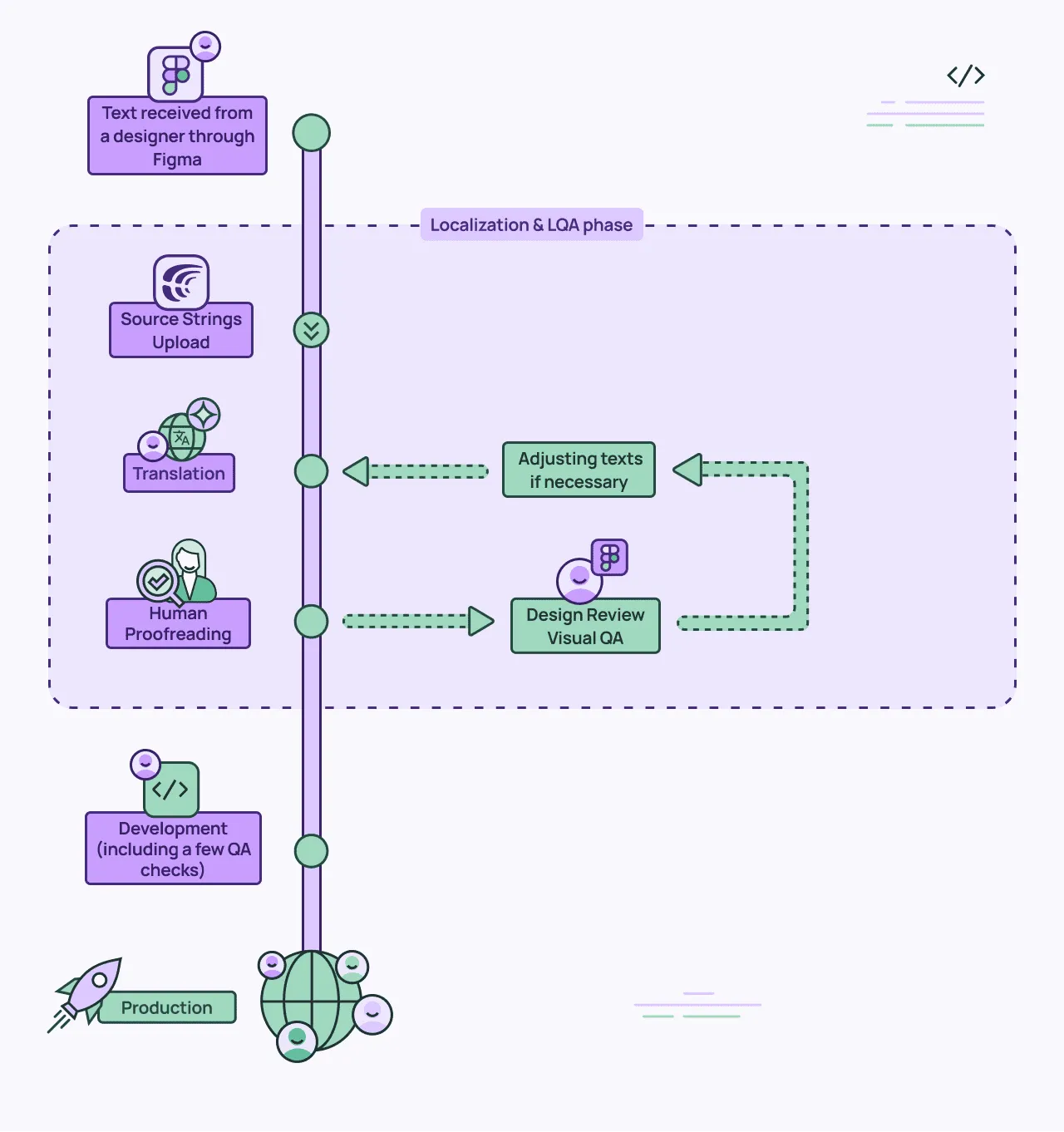
Scenario 1: App (design-led)
- Text is received from a designer through Figma.
- Strings are uploaded to Crowdin for AI translation (GPT-4o + custom AI prompts) and human proofreading.
- Translations are sent back to the designer for UI fit checks before moving through developer QA and into production.
Scenario 2: Site updates & new pages
- Source strings are moved to Crowdin after the dev stage.
- Translation is performed by humans or AI, depending on the language, followed by human proofreading.
- Content is released to a pre-production site for a final team check before going live.
Scenario 3: Launching a new site language
- SEO team sets a task with relevant keywords.
- Technical settings (new languages, glossaries) are configured in Crowdin.
- Initial translation is performed via AI, followed by human proofreading and visual verification on a pre-production site.
Scenario 4: Blog
- Articles are received from the editor along with keywords.
- Translation is performed through AI using custom prompts.
- The final files are returned to the editor for publishing.
Strategy & scale: Snov.io localization formula
Managing a platform of this scale requires a deep understanding of how language, technology, and brand voice intersect. Olena’s strategy moves beyond basic translation by using advanced Crowdin features to ensure every string feels native to the user.
1. Glossaries and translation memory
With over 3M users relying on Snov.io, maintaining a consistent brand voice is important. To manage this, Olena treats the Crowdin Glossary as a living document that provides more than just word equivalents.
- The glossary includes explanations, context, and even grammatical details like gender for nouns.
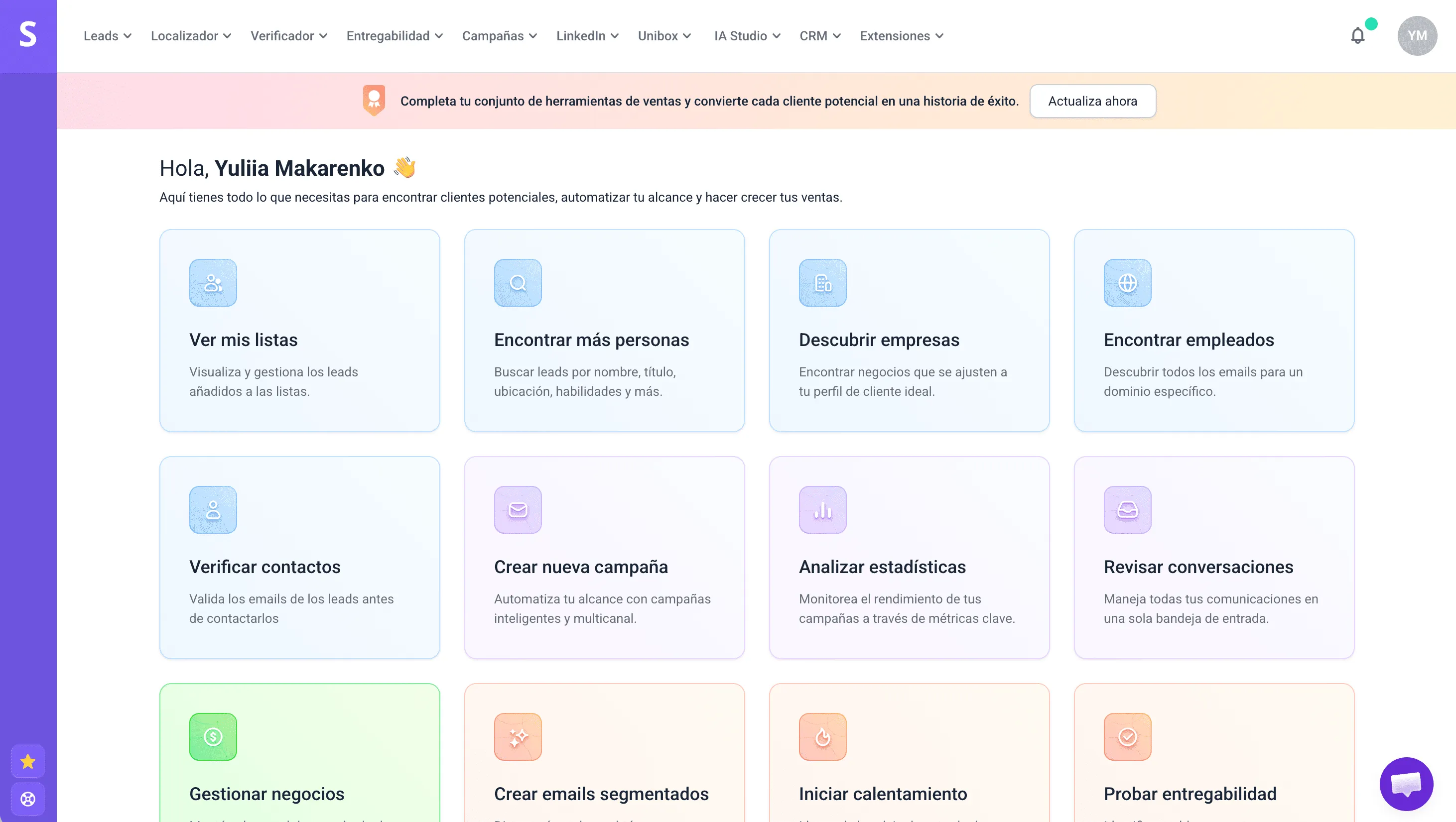
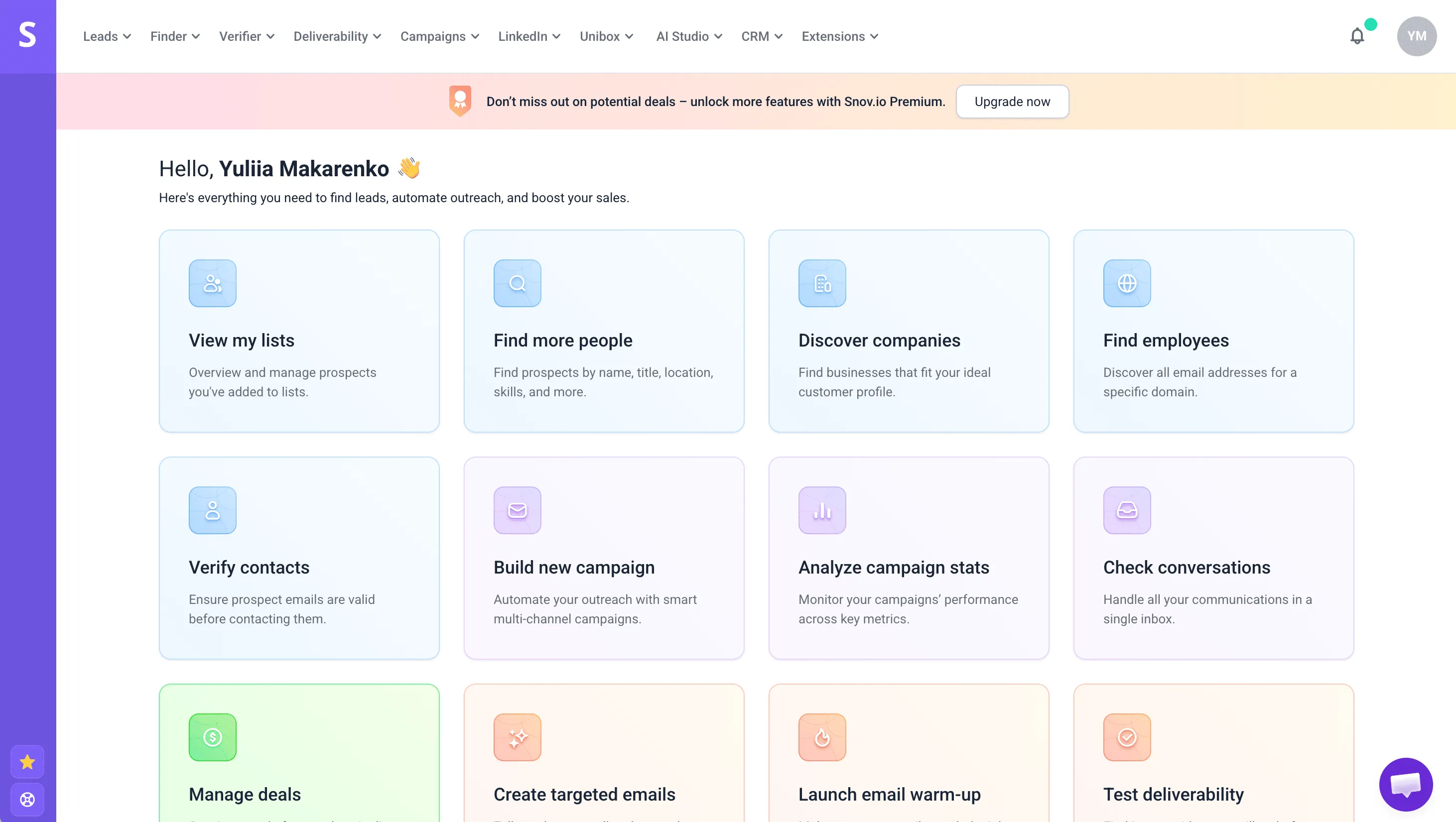
- When expanding into Latin America, Snov.io realized that European Spanish wasn’t a perfect fit. By using the Glossary to harmonize terms between regions, they turned a chaotic expansion into a managed process.
- Translation memory reuses previously approved strings to suggest matches for similar text, ensuring that a feature name used in the app matches the one used in a blog post.
A glossary is non-negotiable… It turns a potentially messy global expansion into something manageable and slightly less stressful.
2. AI with custom prompts
AI is widely used for translations at Snov.io, but it is never used blindly. Olena uses a method she calls “vibe coding lite”, where every prompt is tailored to the specific type of content and the target language.
- *Context-aware prompts: AI is given screenshots or surrounding text to understand where a string will appear.
- Cultural tone: By default, AI often defaults to formal language (like “Sie” in German or “ви” in Ukrainian). Olena uses custom prompts to ensure the AI uses a more natural, modern tone that resonates with 2026 clients.
Each language, each context, each string can need its own little tweak to sound right… What works in English will never work in Ukrainian or German.
“Replace in translations” feature
One of Olena’s most-loved features in Crowdin is “Replace in translations”. When Snov.io’s SEO team requested a minor change to the Ukrainian spelling of “email”, she had to update a source text of 140,000 words.
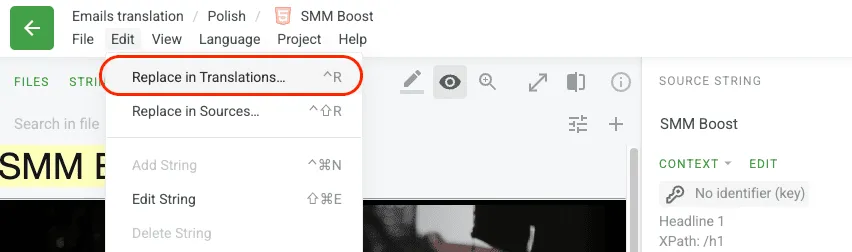
- Instead of manually updating translations, the update took approximately one minute.
- This feature allows for global changes while still providing the control to re-read strings and ensure no accidental errors occur.
Never underestimate the power of a good Crowdin feature. Sometimes a single click can save hours or at least spare you a few grey hairs.
Proving the value: measuring localization ROI
Olena relies on specific data points within Crowdin to prove the department’s ROI to stakeholders.
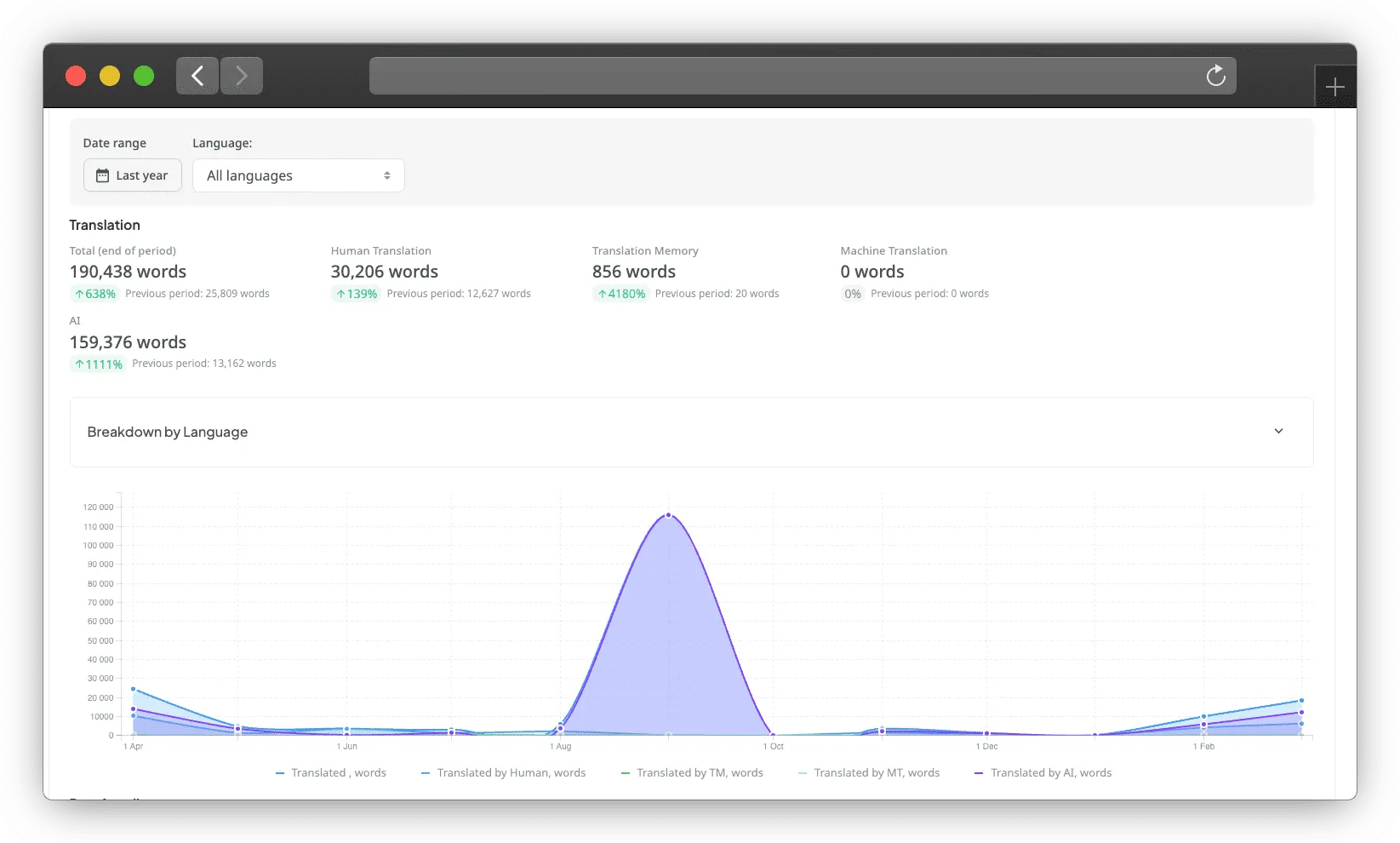
- Olena tracks the number of translated words per project and per language to provide a clear picture of the total volume of work completed.
- These data points allow her to track costs versus output, identifying exactly how much value localization adds to the company.
- By quantifying progress, she can identify bottlenecks and make informed, data-driven decisions regarding resources and priorities.
- Beyond internal reports, Snov.io uses search engine performance as a key success indicator. The platform ranks higher on Google in major languages thanks to the proper keyword usage facilitated by AI-assisted translations in Crowdin.
Sometimes the best way to show ROI isn’t a fancy graph – it’s just words translated on the page, multiplied by the impact they have across 5+ languages.
Final advice: balance is key
For businesses just beginning their localization journey, Olena’s primary advice is to avoid a common trap: don’t underestimate people and overestimate AI. While technology provides the framework for global growth, the human touch remains the heart of a successful product.
AI can speed things up, but it can’t replace the human touch. Not yet.
- AI as an assistant, not a replacement. AI is a powerful tool to speed up processes and reduce costs, but it lacks cultural context.
- Humans are essential for adding cultural nuance, catching awkward phrasing, and ensuring the product actually sounds right.
- At Snov.io, human translators are still considered the real MVPs of localization. AI simply allows them to work faster and smarter.
Inspired by Snov.io's story?

Yuliia Makarenko
Yuliia Makarenko is a marketing specialist with over a decade of experience, and she’s all about creating content that readers will love. She’s a pro at using her skills in SEO, research, and data analysis to write useful content. When she’s not diving into content creation, you can find her reading a good thriller, practicing some yoga, or simply enjoying playtime with her little one.