

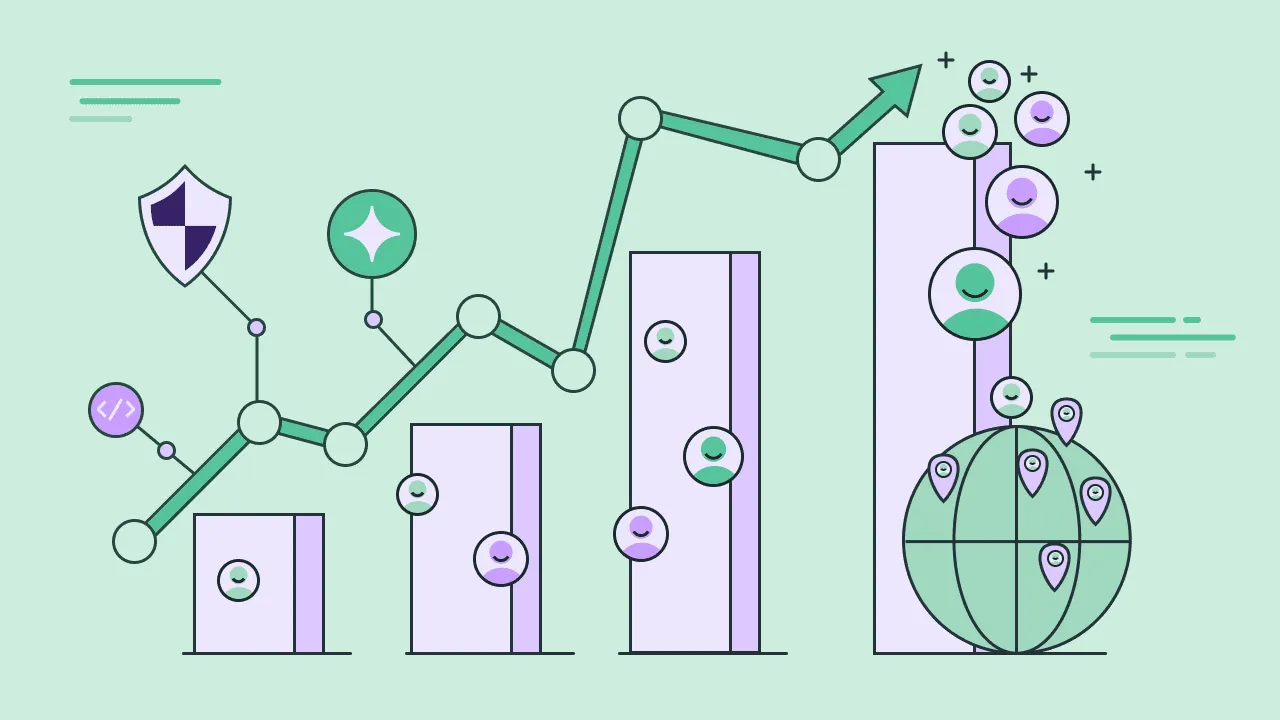
Today more than ever, businesses must communicate across borders and languages to engage diverse audiences. As companies expand into new regions, the need for efficient and scalable language solutions becomes more critical than ever. However, achieving effective multilingual communication isn’t as simple as just translating content. It requires an integrated, strategic approach: Language Operations (LangOps).
LangOps goes beyond mere translation – it is a comprehensive framework for managing and scaling a business’s multilingual content, ensuring quality and consistency across all global markets. This article will explore the components of LangOps, how to build a scalable language strategy, and how modern tools like translation management systems (TMS) can enable businesses to execute their global communication strategies more effectively.
What Is LangOps?
Language Operations (LangOps) is the practice of managing the processes, technology, and people involved in delivering multilingual content across markets. It’s about designing workflows that integrate translation and localization efforts into the core of a business’s global strategy, rather than treating them as isolated tasks.
Unlike traditional translation, LangOps is a cross-functional process. It aligns content creation, marketing, product development, and customer support with linguistic and cultural adaptation. This approach ensures that every aspect of a business’s communication resonates with local audiences while maintaining consistency with the brand’s global voice.
In essence, LangOps creates a systematic process for global content management, making it easier for companies to scale their localization efforts as they grow internationally.
The core components of a LangOps framework
To build a truly scalable LangOps framework, companies must focus on three essential components: technology, people, and processes.
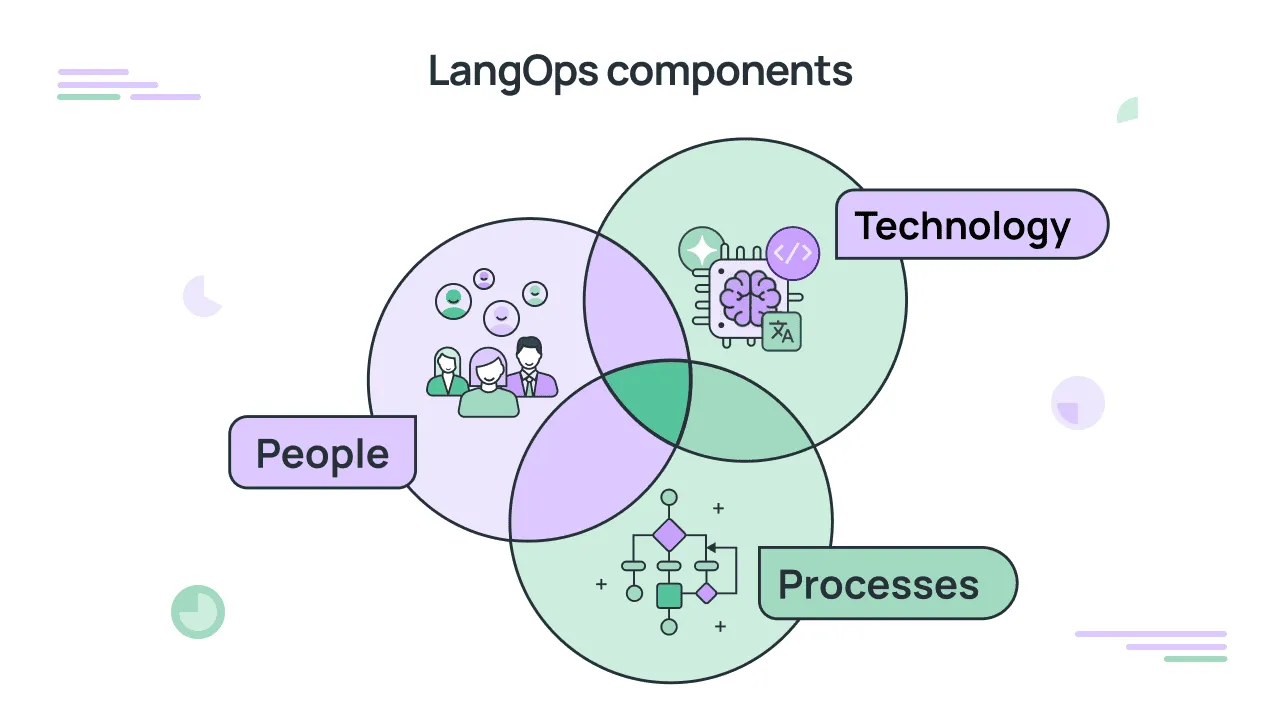
1. Technology infrastructure
The role of technology in LangOps cannot be overstated. A translation management system (TMS) helps centralize the translation process, making it easier for businesses to manage content in multiple languages. These tools often include features such as automated localization workflows, real-time collaboration, and integration capabilities that ensure translation projects are integrated into the wider operations of a business.
By adopting AI-driven tools and platforms, companies can speed up the translation process while reducing manual errors. Automation enhances efficiency, and with the right technology, businesses can achieve fast, scalable localization without compromising quality.
2. Human expertise
While AI and automation play an important role in LangOps, human expertise remains a key factor in ensuring the overall quality and relevance of multilingual content. Rather than being involved exclusively in the translation process, linguists can have a broader role, contributing during the pre-translation phase to provide valuable insights on cultural context, regional variations, and tone.
While AI can assist in speeding up the translation process, human translators bring cultural knowledge and linguistic nuance that can refine machine-generated content and ensure its alignment with local expectations. Translators and linguists often collaborate with localization engineers, product teams, and other stakeholders early in the process to make sure the content is shaped to fit the market’s needs – before the translation even begins.
Their understanding of local culture, idiomatic expressions, and market trends helps to create content that truly resonates with the audience. Human oversight in the post-translation phase also ensures that translations reflect the brand’s voice and message, maintaining quality and consistency.
3. Workflow integration
Effective LangOps integrates language tasks into a business’s existing workflows. This involves mapping out how content is created, reviewed, translated, and published. Centralized platforms allow cross-functional teams to work together on translations, providing real-time feedback and ensuring that the content meets local market expectations.
Streamlined workflows enable businesses to scale localization efforts quickly, allowing them to enter new markets faster and more efficiently.
Best practices for building scalable LangOps
To build a LangOps framework that scales, companies should follow these best practices:
1. Define clear objectives for localization
Before beginning any localization effort, businesses should clearly define their goals. Are they looking to expand into new markets? Improve customer satisfaction? Or enhance brand consistency? Establishing clear objectives ensures that every step of the LangOps framework aligns with the company’s broader business goals.
2. Standardize processes and tools
Building a scalable LangOps framework requires consistency. Businesses should establish standard operating procedures (SOPs) for translation and localization tasks, ensuring that every department and team follows the same process. Using a centralized platform helps standardize workflows, making it easier to collaborate and track progress across different regions.
3. Choose scalable tools
As businesses grow, so too does the volume of content that needs to be translated. Using a scalable TMS allows companies to easily increase the amount of content they localize without losing control of quality. Scalable platforms ensure that as your company expands, the translation processes can grow with you, handling larger volumes of content in real-time.
4. Improve cross-department collaboration
Localization is not just the responsibility of the translation team – it’s a company-wide effort. By fostering collaboration between departments, businesses can ensure that localization efforts are aligned with product development, marketing, and customer support. This collaboration is key to ensuring that all content aligns with the brand’s localization strategy.
Challenges in scaling LangOps
Scaling LangOps is not without its challenges. As businesses expand into multiple regions, they face several obstacles:
1. Quality control at scale
Maintaining high-quality translations can be difficult as content volume increases. With so many languages and content types to manage, companies may struggle to maintain consistency across regions. To mitigate this, businesses can leverage automated quality assurance tools that check for common translation issues and ensure that every piece of content meets the required standards.
2. Handling diverse content formats
Global brands often deal with different content types, from web copy to technical manuals to customer support responses. Each format requires a tailored approach to translation. Effective translation management systems allow companies to handle diverse content types and ensure that each one is translated correctly and on time.
3. Fast-paced market changes
The global market is constantly evolving, and businesses must adapt quickly. Localized content must keep pace with product updates, marketing campaigns, and customer feedback. Using real-time translation management tools ensures that content remains up-to-date, even in fast-moving markets.
The role of a Language Service Provider (LSP) in LangOps
While businesses may have internal teams handling many aspects of their localization and translation efforts, a Language Service Provider (LSP) can be a crucial partner in building a scalable LangOps framework. However, it’s important to understand that the role of an LSP is not to replace internal teams or technology – rather, it is to complement and enhance the language strategy.
Collaborative partnership
An experienced LSP brings specialized expertise in language solutions, technology integration, and localization best practices. They work as an extension of a company’s internal teams, offering guidance and support in navigating the complexities of global communication. For example, LSPs can offer valuable input in selecting the right translation tools, ensuring that systems integrate smoothly with the company’s existing tech stack.
Scalable support
As businesses scale into new regions and languages, an LSP can help manage increasing volumes of content. Their ability to quickly mobilize a network of linguists, localization project managers, and engineers makes it easier to expand operations without compromising on quality or efficiency. An LSP can also provide expertise in handling unique content types, such as legal documents, marketing materials, or e-commerce product descriptions, that require specific linguistic or cultural expertise.
Nuanced language expertise
An LSP’s linguists and localization experts bring nuanced cultural knowledge and regional experience that is critical in ensuring that content doesn’t just translate literally but also resonates with target audiences. They can advise on tone of voice, local idioms, and cultural preferences, helping companies avoid missteps and connect authentically with local markets.
How Crowdin supports your LangOps journey
A LangOps framework is only as strong as the technology that holds it together. And this is where a platform like Crowdin becomes genuinely useful as the infrastructure that makes scalable, quality-driven localization actually work in practice.
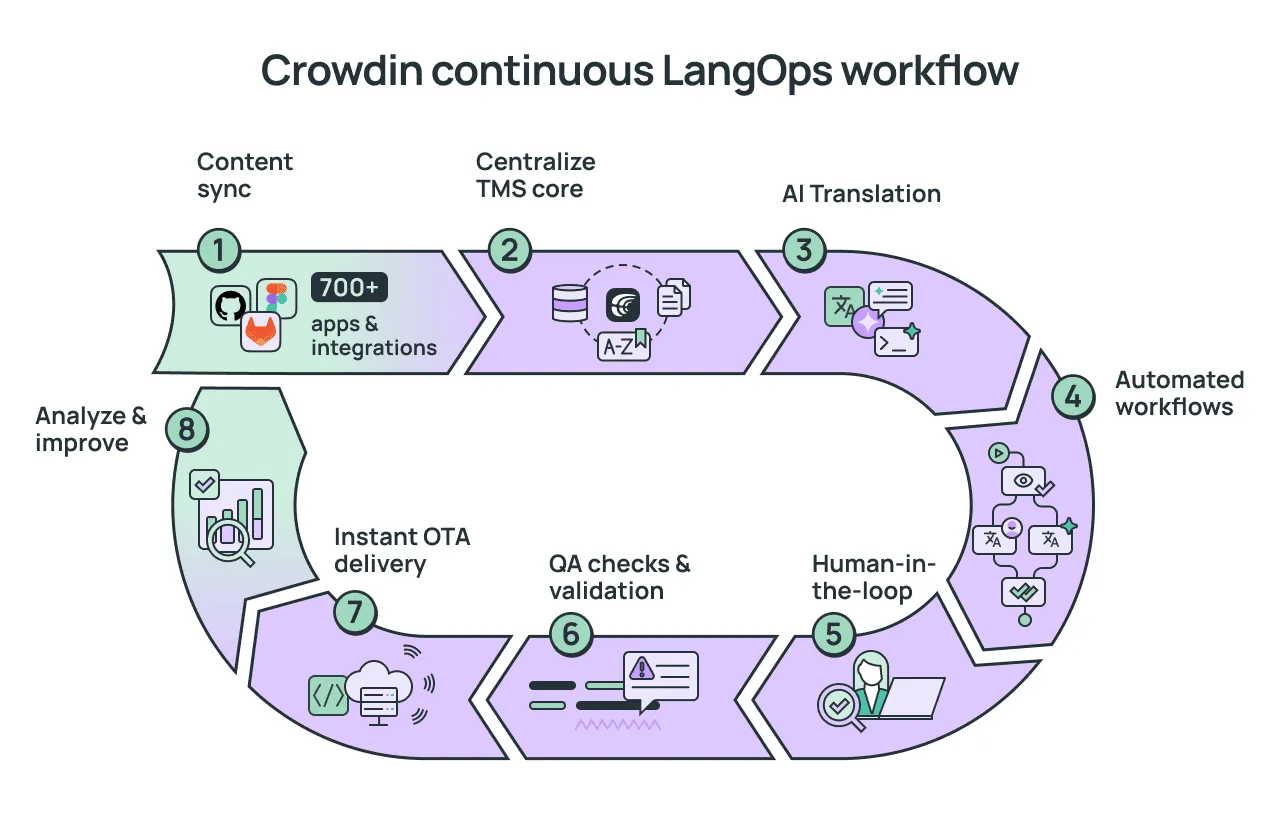
Everything we’ve discussed in this article – centralised workflows, cross-functional collaboration, quality at scale, handling diverse content formats – Crowdin addresses directly, automating translation workflows and connecting with over 700 apps and integrations, which means your content (whether it lives in a CMS, a code repository, a design tool, or a customer support platform) can flow into a single, manageable process.
For teams building out their technology infrastructure, Crowdin connects with GitHub, GitLab, Bitbucket, Figma, and more, and offers comprehensive reports to monitor translation progress, analyze costs, and measure team productivity. That’s the kind of visibility a LangOps manager actually needs.
For human experts – the linguists and reviewers who ensure quality doesn’t get lost in automation – Crowdin offers translation memory, terminology management, and quality assurance features that support their work rather than bypass it. Context tools, glossaries, and in-product review environments mean translators can do their job properly, not just quickly.
And for businesses that need to scale: whether your team consists of 100 or 100,000 people, Crowdin Enterprise allows you to scale your team and the scope of work as your needs change – with fine-grained permissions and full visibility across your organization.
The goal of LangOps has always been to make global communication work systematically, without losing the human layer. Crowdin is a platform built with that same logic in mind.
To wrap it up
Building a scalable LangOps framework is key to enabling global business success. By integrating technology, human expertise, and well-defined processes, companies can ensure that their multilingual content meets the needs of local markets while maintaining global consistency.
As businesses scale their operations, leveraging the right language management tools and AI-driven solutions can significantly improve efficiency. Working with the right Language Service Provider (LSP) ensures that businesses have the support and expertise they need to navigate the complexities of global markets.
With a strong LangOps framework, your business can expand globally with ease, offering culturally relevant and consistent content to audiences across the world.
Build Your LangOps Infrastructure with Crowdin

Diego Cresceri
Diego Cresceri is the founder and CEO of Creative Words, a leading language service provider based in Italy. He has extensive industry experience, having worked as a translator, project manager, and chief operations officer prior to founding Creative Words.